14-day refund
A$99
Run the kind of shop that remembers its people.
Flag a customer as VIP, Caution, or Do Not Serve to make sure you act accordingly. Set parameters for tags like Regular, Active, Loyal, Bargain Hunter, and understand how they interact with your shop at a quick glance.
Order and returns history appear with lifetime value so you know right up front how much this customer means to your business, very literally.
Pick. Pack. Generate the invoice and packing slip. Click Click and Ship with a tracking number all from one place, all without leaving the customer’s full context behind. Easy split packing in case something is out of stock or on backorder, or in another warehouse entirely.
Add a system note for next time, or send off a note in an email to the customer. The notes history is there for review, right in the worflow window. Customers can also send you notes from their account if you have that toggled on.
And if you need to go a step deeper, you can head over to the order in WooCommerce, too.
Order Details
Order #2070
Apr 26, 2026 2:49 am
Payment Received
$34.99
Customer
Kenji Hassan
VIP
Items to Pack
x2
x1
Packages
Ready to Ship
Baseball Cap
x2
Water Bottle
x1
Select Carrier…
Your Shipping Carrier
Tracking Number
Shipped
Baseball Cap
x2
Water Bottle
x1
Your Shipping Carrier: Tracking Number
0/3 Packed
3/3 Packed
· 3 Shipped
Shipping
Kenji Hassan
895 Test Street
Sydney New South Wales 2440
Add Note
Sent GWP
Add your note…
Note Added
This Order
Customer History
Documents
The whole day, on one screen.
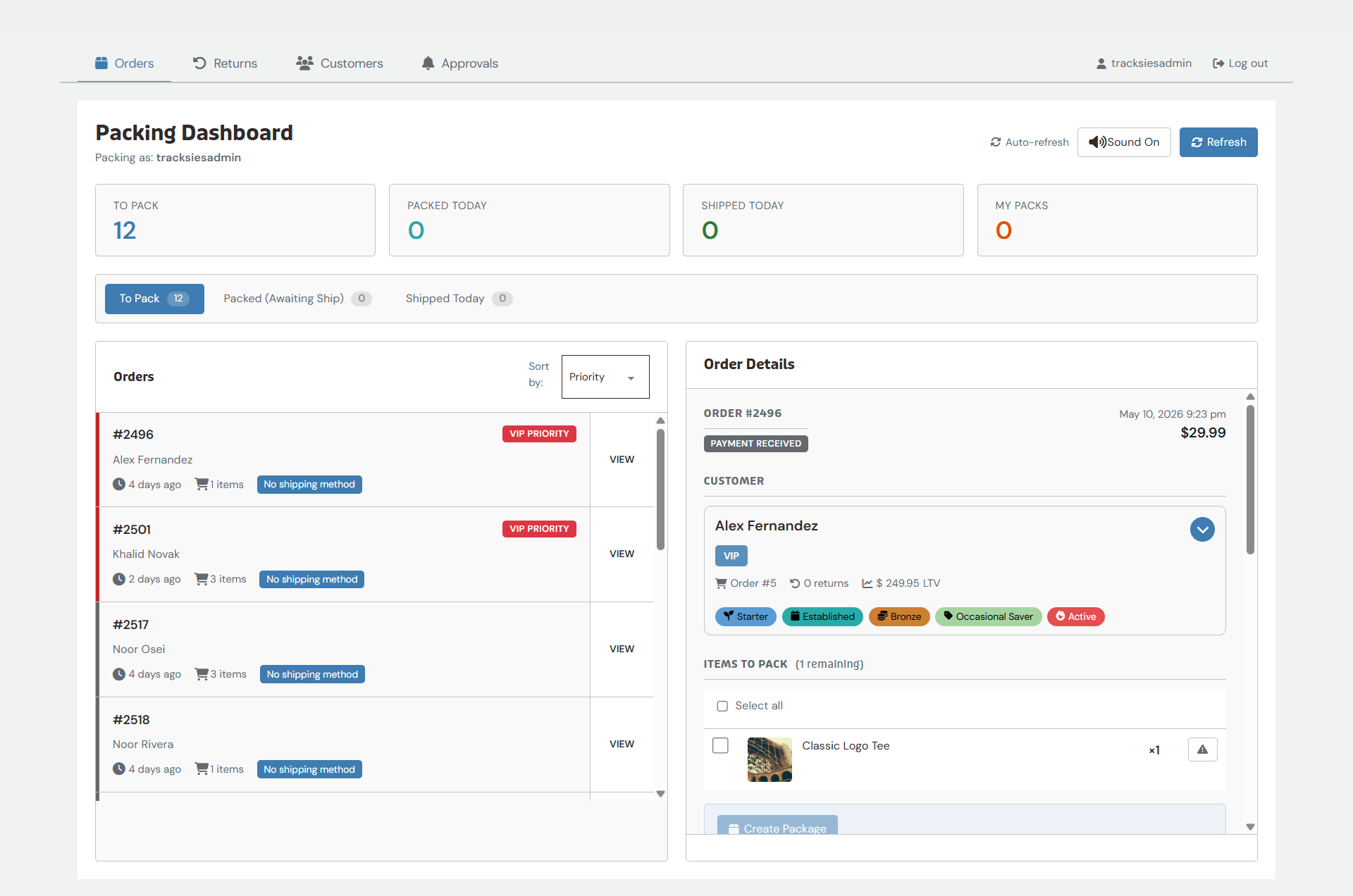
Open HQ and the queue’s already sorted: Pending, Partially Packed, Packed, Partially Shipped, Shipped, Ready for Pickup. Priority-coloured by your rules so the urgent stuff sits at the top, the rest in order received. You set the priority based on your rules: customer flags, shipping rules, ACF fields, product categories… and more.
One order, multiple parcels, no confusion.
Pack what you have, ship the rest later. Each parcel gets its own packing slip with the contents of that package, and your customer gets tracking per parcel. One consolidated email or two separate, your call. Order status walks through Partially Packed → Partially Shipped → Shipped as the work actually happens.
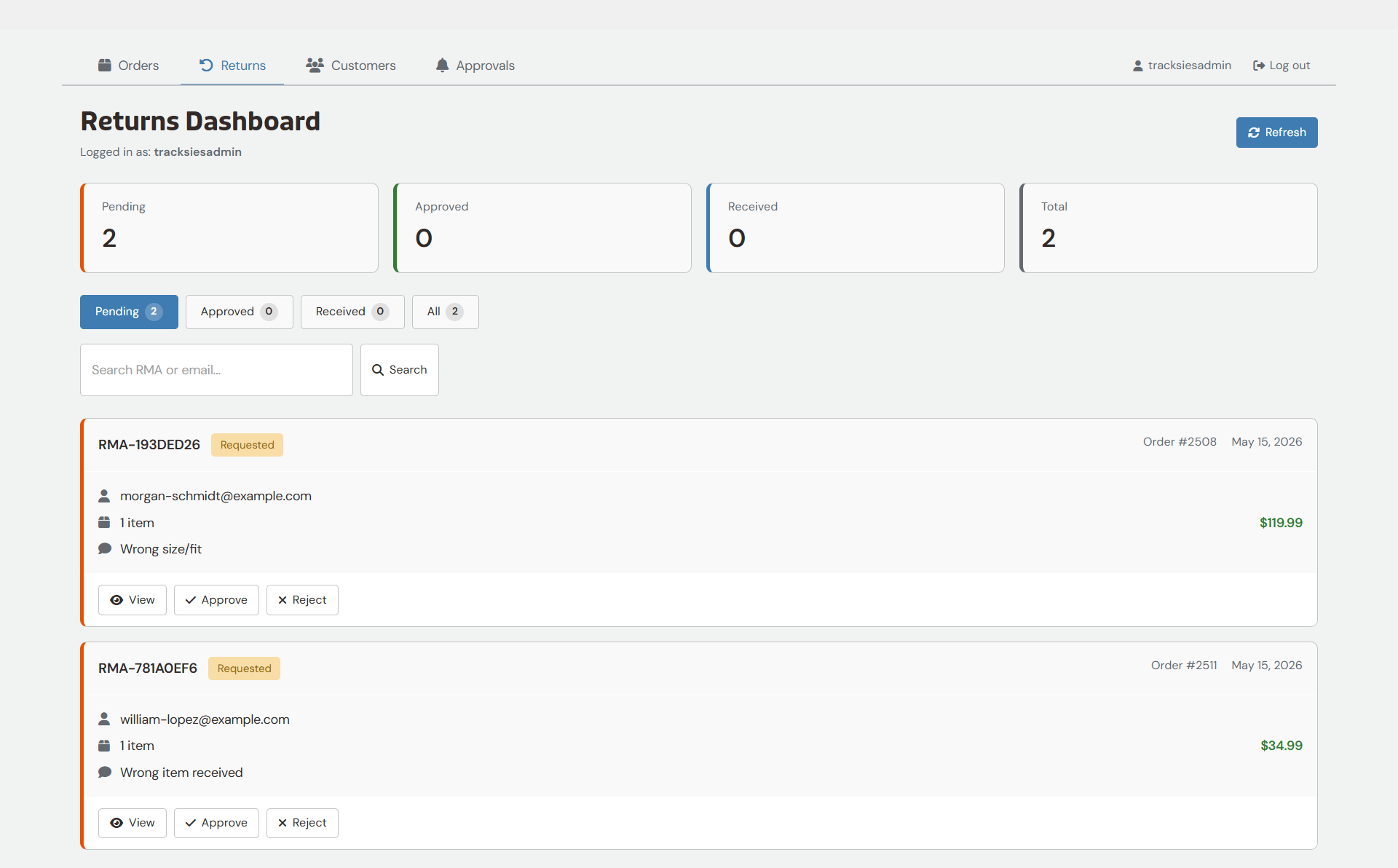
Returns, sorted. Even the messy ones.
Customer self-service or admin-only: same workflow either way, your call. Configure eligibility, windows, restocking fees, and per-item resolution (refund, replacement, or both). Split returns handle cleanly when a customer sends back two of three items: order walks through Partially Returned → Returned as parts come back. And the returns policy even surfaces via shortcode or injection into the product template and Returns Policy Page.
Branded emails, status names that match reality.
Open the Designer, set your fonts and colours once, and every customer email — order received, shipped, ready for pickup, return approved — comes out looking like you made it on purpose. Partially Packed means partially packed. Ready for Pickup means come and get it. The status your customer sees matches what’s actually happening on your end.
Real data, in one click. Wipe it just as cleanly.
Click the seeder and your store fills up with customers, products, orders in flight: realistic data that plays well with the rest of the Tracksies suite. Developers and agencies can use it to walk clients through populated dashboards instead of empty screens, and show off fully developed and designed pages. DIY shop owners can use it as training wheels to explore every feature with real data, then safe-wipe before launch. Your real customers, orders, and products are never touched.
Tracksises HQ Features
The fastest way to understand HQ is to use it.
Tracksies HQ is not like anybody else and does a lot of pretty unique stuff (like, a lot a lot) so we’ve broken it down for a quick glance. Click on the head-with-tie to see and a Store Manager on our Have A Go Demo, choose no-tie to login as a customer (randomly chosen, so you can login again and see another customer story), click the docs to get the tech specs, and Read More to deep dive into the features.
Frequently Asked Questions
What is Tracksies HQ?
Tracksies HQ is an operational plugin for WooCommerce stores that adds customer intelligence, order workflow, returns management, branded documents, and a unified admin experience all running inside WordPress, on your own hosting.
The short version: HQ remembers your customers properly (tags, flags, notes, history, all surfaced on the order screen), sorts your packing queue by your priority rules, handles real-world packing (partial fulfilment, split shipments, auto-refund of unavailable items, branded packing slips per parcel), runs returns end-to-end (customer self-service or admin-only), and brands every customer email and PDF from one Designer.
It replaces the kind of fragmented stack most growing stores end up with — separate plugins for CRM, invoices, returns, customer intelligence, each with its own styling and none of them talking to each other — with one integrated tool. Part of the Tracksies suite (Trustie for reviews, Perkie for loyalty, Squizzie for analytics, Packsie for staff dashboards), but fully standalone if you just want HQ.
Is there anything else out there like Tracksies HQ?
Lots of things do parts of what HQ does. There are good plugins for customer profiles and CRM-lite features. Solid plugins for returns. Standard plugins for PDF invoices and packing slips. Order-status plugins. Packing dashboards bundled inside shipping tools. Email designer plugins (Kadence’s is excellent and a lot of WooCommerce shops already use it).
What’s not really out there is one integrated tool where customer intelligence, order workflow, packing, returns, and branded documents share a single design system and live in your WordPress admin together. Most stores end up with five or six plugins doing slices of this work; each with its own settings, its own update schedule, its own look, occasionally breaking each other when one updates faster than another.
HQ pulls the pieces into one place. The Designer styles emails, PDFs, status badges, and admin chrome from one settings page. The seeder fills it all with realistic data so you can see how the parts work together.
So: yes there are plugins that do parts of what HQ does. No, we don’t think there’s anything else that does the whole job the way HQ does.
Best way to judge for yourself is the demo: log in, click around, see if the integration feels like it’d save you the time and faff that buying separate plugins doesn’t.
Is HQ a good fit for my shop?
Probably, if you’re any of these:
- A solo operator running a real WooCommerce shop from your own space (kitchen table, studio, warehouse corner) who’s outgrown the default admin
- A small team (2-5 people) where you’re still hands-on but you’ve hired packing help
- A WooCommerce owner who’s been eyeing Shopify for a better admin experience but wants to keep your data on your own server
- A specialist shop (membership, subscription, made-to-order, regulated products, anything a bit unusual) where off-the-shelf ecommerce software never quite fits your workflows
- A casual shop just starting out who wants to set things up properly from day one, so growth doesn’t mean scrambling later
The admin experience HQ builds for you is the same whether you do 20 orders a month or 2,000: you just notice the difference more as volume goes up. Setting up with HQ early means your priority rules, your customer intelligence, your branding, your workflows are all already there when you need them. No painful migration at the growth moment when you can least afford it.
The one case where HQ isn’t the right call: you’re on Shopify and don’t want to migrate. HQ is a WordPress/WooCommerce plugin — it doesn’t run on Shopify. If you’re happy on Shopify, stay happy on Shopify.
Easiest way to know for certain either way: spend five minutes on haveago.tracksies.com, logged in as the shop manager. If it feels like how you’d want to run your store, you’re probably our customer.
How does HQ handle packing and partial fulfilment?
WooCommerce’s default approach is basically “mark it Processing, then mark it Completed.” Real packing days aren’t that clean.
HQ adds the Operations Dashboard, where you tick line items as you pack. Only got two of three? Mark the third unavailable and HQ auto-refunds that line cleanly with an explanatory email. Need to ship in two parcels? Split the order: each parcel gets its own packing slip with its own contents, and your customer gets tracking per parcel (one consolidated email or two separate, your call). The order walks through Partially Packed → Partially Shipped → Shipped so both you and the customer know exactly where it stands.
Priority rules sort the queue. Age-based escalation makes sure nothing hides at the bottom. And every packing card surfaces the customer’s context — flags, notes, order history — right there beside the order, no tab-hopping.
How does HQ handle returns in WooCommerce?
WooCommerce by default doesn’t really have a returns system… you refund an order and that’s about it. HQ adds a proper returns engine for stores that need one.
Customers can lodge returns themselves through their My Account (or you can turn that off and lodge them yourself from the admin side, same workflow either way). You configure the rules: which products are returnable, how long customers have to request a return, how long they have to ship it back once you approve, whether you charge restocking fees, whether some items are refund-only or replacement-eligible, and what reasons customers can pick from.
Your returns policy auto-generates from those rules as a shortcode, so the policy your customers read always matches the policy your store actually enforces. No drift. Change a rule, the policy updates everywhere.
On the admin side: approve, reject, process the refund, tick restock if it’s going back on the shelf. The order status walks through Partially Returned → Returned as the work happens, so your reports stay honest about what shipped and what came back.
How does HQ help me recognise my best customers?
Customer profiles in HQ are proper profiles: order history timeline, lifetime value, behavioural tags across the channels you care about (tenure, commitment, value, price sensitivity, engagement, returns behaviour), and the flags you’ve set manually (VIP, Caution, Do Not Serve).
You set the thresholds. What counts as “committed” in your shop is your call: two orders, five orders, thirty orders, whatever matches your customer pattern. HQ watches in the background and tags customers as they cross those thresholds.
When an order comes in, the customer’s context is right there on the order screen. Sixth order, A$847 lifetime value, VIP, “prefers card to bubble-wrap.” No more digging through previous orders to remember who’s who. No more wondering whether to send the thank-you note because you already forgot her last one. HQ remembers. You act on what HQ remembers. Your customers notice.
How does HQ sort my orders by priority?
You tell HQ what matters to your shop, and HQ sorts accordingly.
The Priority Rules builder has tabs for the signals you can configure: shipping methods (express and same-day usually get marked Urgent), customer flags or tags (VIPs usually get High priority), order value thresholds, product categories that need special handling, specific product tags, and custom fields your store already uses (Advanced Custom Fields, Studio Wombat, Flexible Product Fields, WooCommerce Product Add-ons — detected automatically).
You drag the rules into the priority order that makes sense for you. If an order matches more than one rule, HQ takes the first match from the top — clean logic, no hidden combination math. Every new order gets a priority level automatically: Urgent, High, Elevated, or Normal. Colour-coded in the Designer (your colours, not a fixed palette).
On top of the rules, there’s age-based escalation: if an order’s been sitting unpacked longer than your threshold, it automatically climbs in priority. Set the rules that suit your shop (hours, days, business-hours-only). Nothing hides at the bottom of the queue.
I'm on Shopify because the admin experience is nicer. Would HQ change anything for me?
Probably a fair bit, honestly. You went to Shopify for good reasons: the admin feels faster, cleaner, more unified, and most WooCommerce setups don’t come close out of the box. We get that completely.
What HQ does is bring that same kind of unified, fast, makes-sense experience to WooCommerce. One dashboard for packing. Customer profiles that actually tell you who you’re talking to. Order statuses that match what’s happening. Branded PDFs and emails that look like you made them on purpose. All on your own server, at a flat annual price.
If you want to see what that feels like before making any decisions, haveago.tracksies.com is a live store with the full Tracksies suite running. Log in as the shop owner. Poke around. See if it changes anything for you. No pressure.
Does Tracksies HQ require Trustie or any other Tracksies plugin?
No. HQ runs standalone, you just need WooCommerce. It plays beautifully with other Tracksies plugins when you’ve got them (the Designer shares settings across the whole suite, the seeder is plugin-aware, Trustie reviews appear in customer profiles, Perkie loyalty points surface on the order screen), but HQ is complete on its own.
Do I need Packsie too?
Not unless you’ve got staff or prefer the frontend experience. HQ’s packing and returns workflows live inside the WordPress admin so it’s perfect for solo operators and small shops where you’re still the one packing orders.
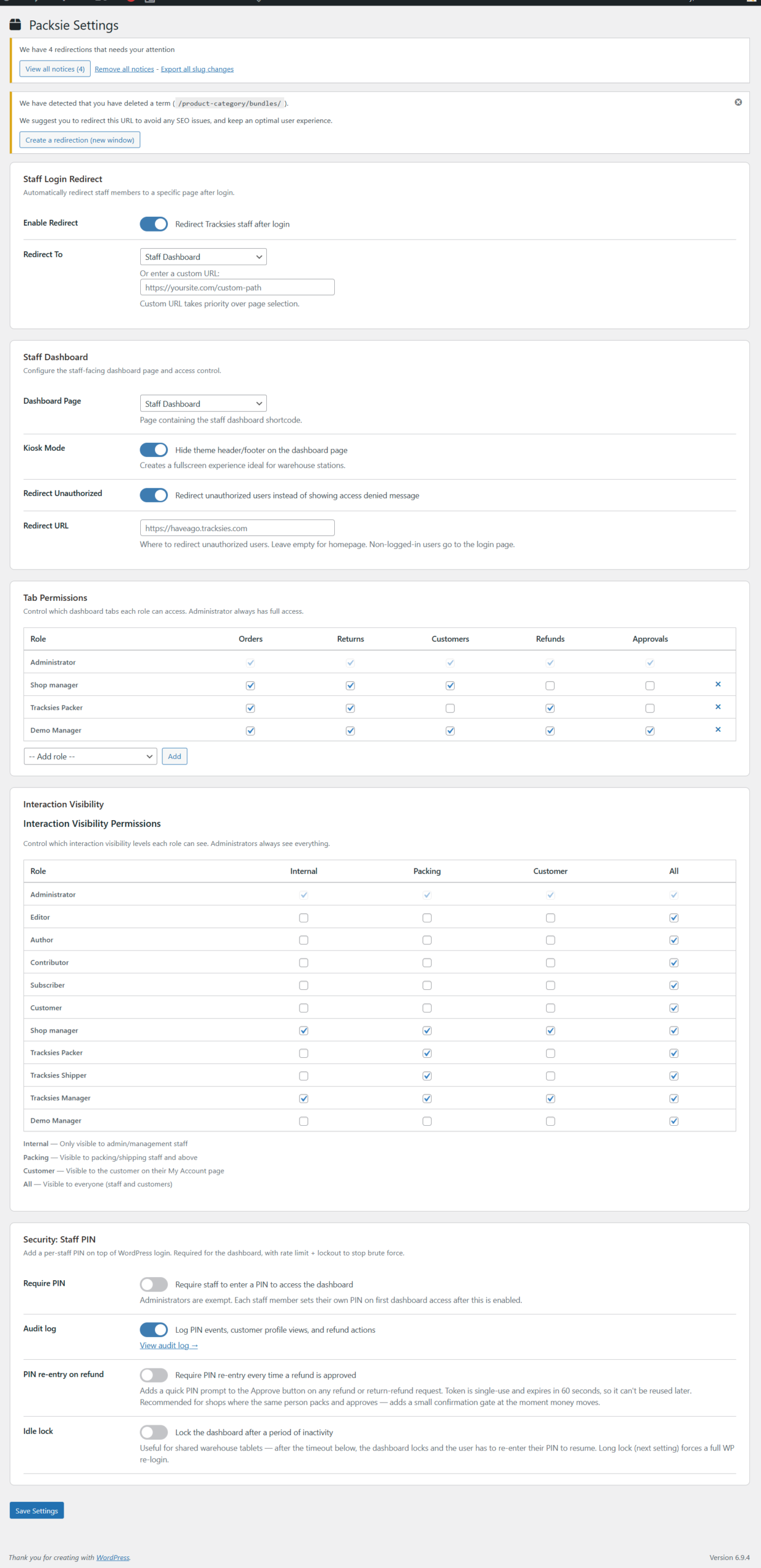
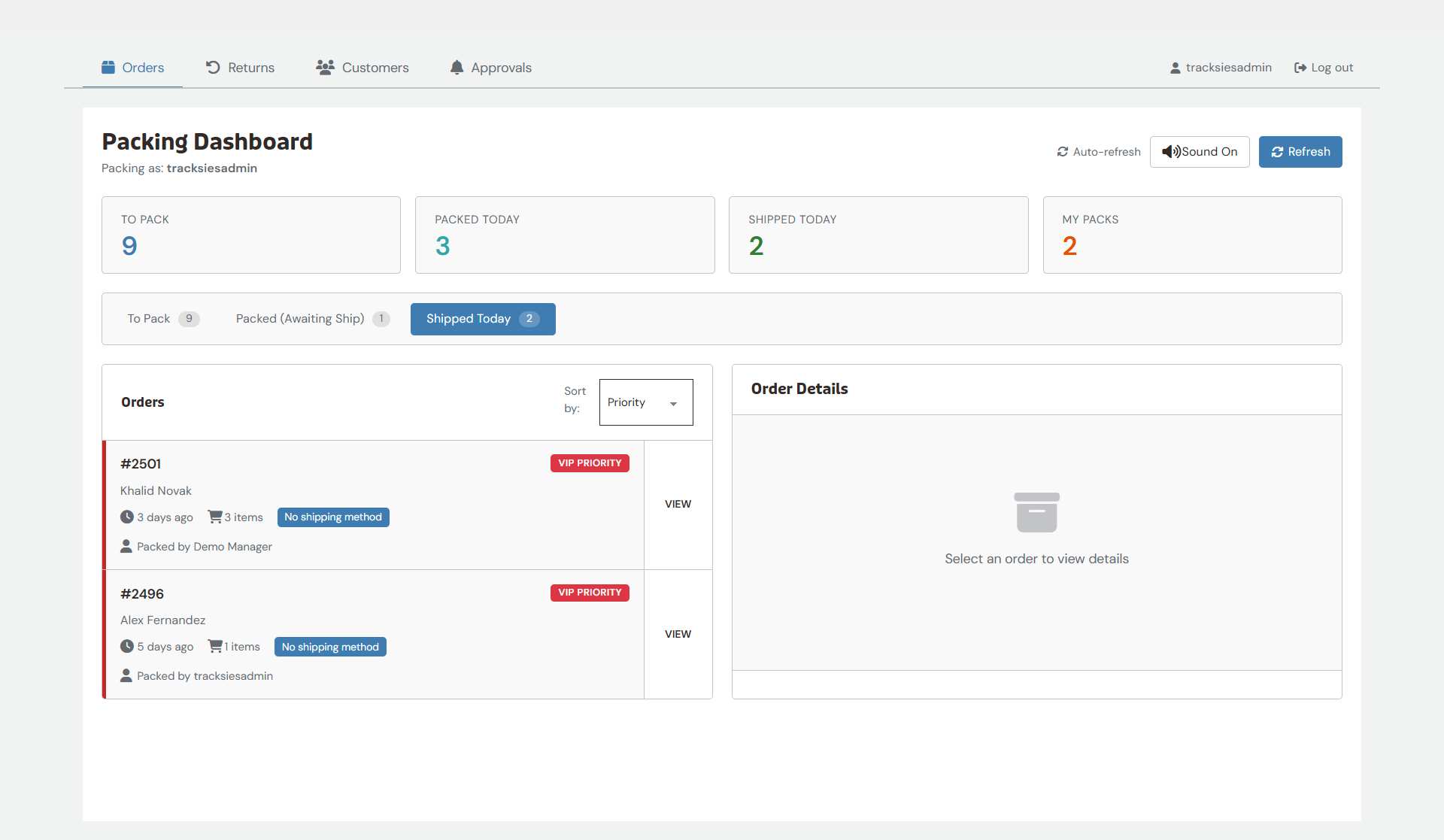
Packsie adds a frontend packing dashboard and a frontend returns dashboard your staff can access without WordPress backend access rights, plus staff role management, order claim, packed-by tracking views, and staff performance reporting. If you’re the only one packing, HQ alone is exactly what you need.
Does Tracksies HQ work with HPOS?
Yes: Tracksies HQ is declared compatible with WooCommerce’s High Performance Order Storage. If your store’s on HPOS, HQ talks to the modern schema natively. If you’re still on the legacy post-meta order storage, HQ works on that too. Either way, it just works.
Does Tracksies HQ work with my page builder (such as Bricks, Elementor, Divi, Oxygen)?
Yes. HQ hooks into WooCommerce and WordPress via shortcodes and via theme-specific blocks, so it works with whatever page builder you’re using. The customer-facing bits (My Account returns, order status displays) inherit your theme’s styling through the Designer.
Does Tacksies HQ work with PitchPrint?
Full integration! If you sell customised products via PitchPrint, customer designs preview directly in the HQ packing dashboard, with print-ready file download right there. Your printers (or you) can see and download exactly what to produce without logging into a separate tool.
Does HQ work with ShipStation?
Yes, through a handoff. HQ adds a “Ship in ShipStation” button to the order Documents section (next to your invoice and packing slip). Click through and the order data’s already waiting for you in ShipStation — no manual copy-paste, no “which order was that again?” It’s an opt-in integration, off by default — enable it under Tracksies > Settings > Integrations when you’re ready.
Is HQ self-hosted? Where is my data stored?
Yes, Tracksies HQ is self-hosted: it’s a WordPress plugin that runs on your hosting, like any other WordPress plugin. Your customer data, order data, tags, flags, notes, and returns all live in your own WordPress database, on your own server.
No external API for the core workflow. No “your data lives on our servers” situation. If you want to move hosts, you export the database and move. If you want to stop paying for HQ, your data stays exactly where it is (more on that below).
What happens if I cancel Tracksies HQ?
Your data stays exactly where it is: orders, customers, tags, flags, notes, returns, everything. HQ just stops receiving updates (new features, bug fixes).
What deactivates specifically: new orders won’t get priority rules applied, new customers won’t get automatic tags, new returns can’t be lodged through the admin workflow. Existing data stays intact, and if you reactivate your licence later, everything picks up where it left off.
We don’t recommend leaving your Tracksies HQ active and installed without receving updates however as updates are required to keep your site secure and safe (among other things, like adding and improving features).
Are PDF invoices EU-compliant?
Yes. Sequential numbering (with a configurable prefix), business details, tax handling, and the layout structures EU VAT requirements expect are all there out of the box. Your accountant will recognise what they’re looking at.
If you’re in a specific jurisdiction with unusual requirements, check with your accountant — we’re not tax advisors and can’t guarantee compliance in every country — but the foundations are built to the common EU standard.
I'm a developer building a WooCommerce site for a client. Will HQ make my life easier or harder?
Easier, we hope! Tracksies HQ replaces a stack of plugins you’d otherwise install separately and configure individually, with one Designer that handles brand styling across emails, PDFs, and admin chrome. Your client gets a unified admin experience without you having to bridge five different config screens.
The seeder is the part agencies tend to love most: one click and you’ve got a populated demo store to walk your client through, instead of selling from empty screens. Wipe it before launch, real client data goes in, you’re done.
For the technical detail (HPOS support, hooks and filters, REST API, page builder integration, performance), see the Tracksies HQ docs. They’re written for developers who want to know how things actually work.
Do you offer discounts on Trustie Pro?
No, we don’t do bundles or sales. But you do get a discount of 20% on renewals to say thanks for sticking with us.
Prices may go up in future, so grab Tracksies HQ now for the best price.